
How Ethnic and Cultural Context Shapes Technology Integration Knowledge Among Trainee Teachers in Western China
The Asia-Pacific Education Researcher (Under Review), 2026
The TPACK Model
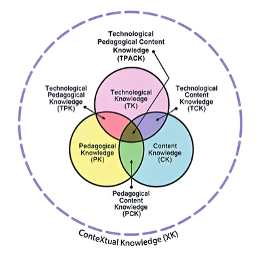
What This Paper Is About
In Xinjiang — one of China’s most culturally and linguistically diverse regions — pre-service teachers must integrate technology into classrooms where students come from vastly different cultural backgrounds. This paper examines how that cultural diversity shapes their TPACK (Technological Pedagogical Content Knowledge), rather than treating culture as a background variable.
The TPACK Framework
         ┌──── TK ────┐
         │  Technology │
         │  Knowledge  │
    ┌────┴──┐     ┌──┴────┐
    │  TPK  │     │  TCK  │
    └───┬───┘     └──┬────┘
   ┌────▼─────────────▼────┐
   │       T P A C K       │
   │   All three integrated │
   └────▲─────────────▲────┘
    ┌───┴───┐     ┌──┴────┐
    │  PCK  │     │       │
    └───┬───┘     │       │
   ┌────┴──┐     ┌┴──────┐
   │  PK   │     │  CK   │
   │Pedagogy│     │Content│
   └───────┘     └───────┘
         ▼
   ┌─────────────────┐
   │    CONTEXT:      │
   │  Cultural Diversity │
   │   in Xinjiang    │
   └─────────────────┘
Core Argument
Most TPACK research treats context as static — a school type, a subject area. This paper treats cultural diversity as a dynamic contextual force that actively reshapes how each TPACK component develops. Pre-service teachers in Xinjiang don’t just “add technology” to teaching; they must negotiate between:
- Multiple languages and scripts in a single classroom
- Different cultural norms around technology use and authority
- Content knowledge that may carry different cultural meanings
- Pedagogical approaches that resonate differently across cultural groups
What We Found
| TPACK Component | Impact of Cultural Diversity |
|---|---|
| TK | Digital tools must support multilingual input and interfaces |
| PK | Teaching strategies must accommodate different communication norms |
| CK | Subject content sometimes carries culturally-specific interpretations |
| TPACK | Integration is most challenging — requires simultaneous cultural sensitivity across all three domains |
Why It Matters
Teacher education programs typically train TPACK as culturally neutral — “here’s how to use technology in teaching.” This paper shows that in diverse settings like Xinjiang, TPACK development is inseparable from cultural competence. Programs serving diverse populations need to embed cultural awareness directly into technology integration training, not treat it as a separate module.