
Pointing to Context from a Relevance Theory Perspective: A Comparative Study of Human and Machine Interpreting
Mediterranean Journal of Social Sciences, 2025
Abstract
This study investigates whether machines can fully or partially replace human interpreters by comparing their context-awareness capabilities in simultaneous interpreting. Using a quantitative quasi-experimental design with Coh-Metrix analysis across 108 linguistic indices.
Research Design
| Component | Detail |
|---|---|
| Design | Quantitative quasi-experimental |
| Human Interpreters | 3 professional interpreters |
| Machine Devices | Google Speech Translation (GST) + iFlytek |
| Analysis Tool | Coh-Metrix (108 linguistic indices) |
| Statistical Test | One-way ANOVA |
| Framework | Relevance Theory (Sperber & Wilson, 1986) |
Results & Analysis
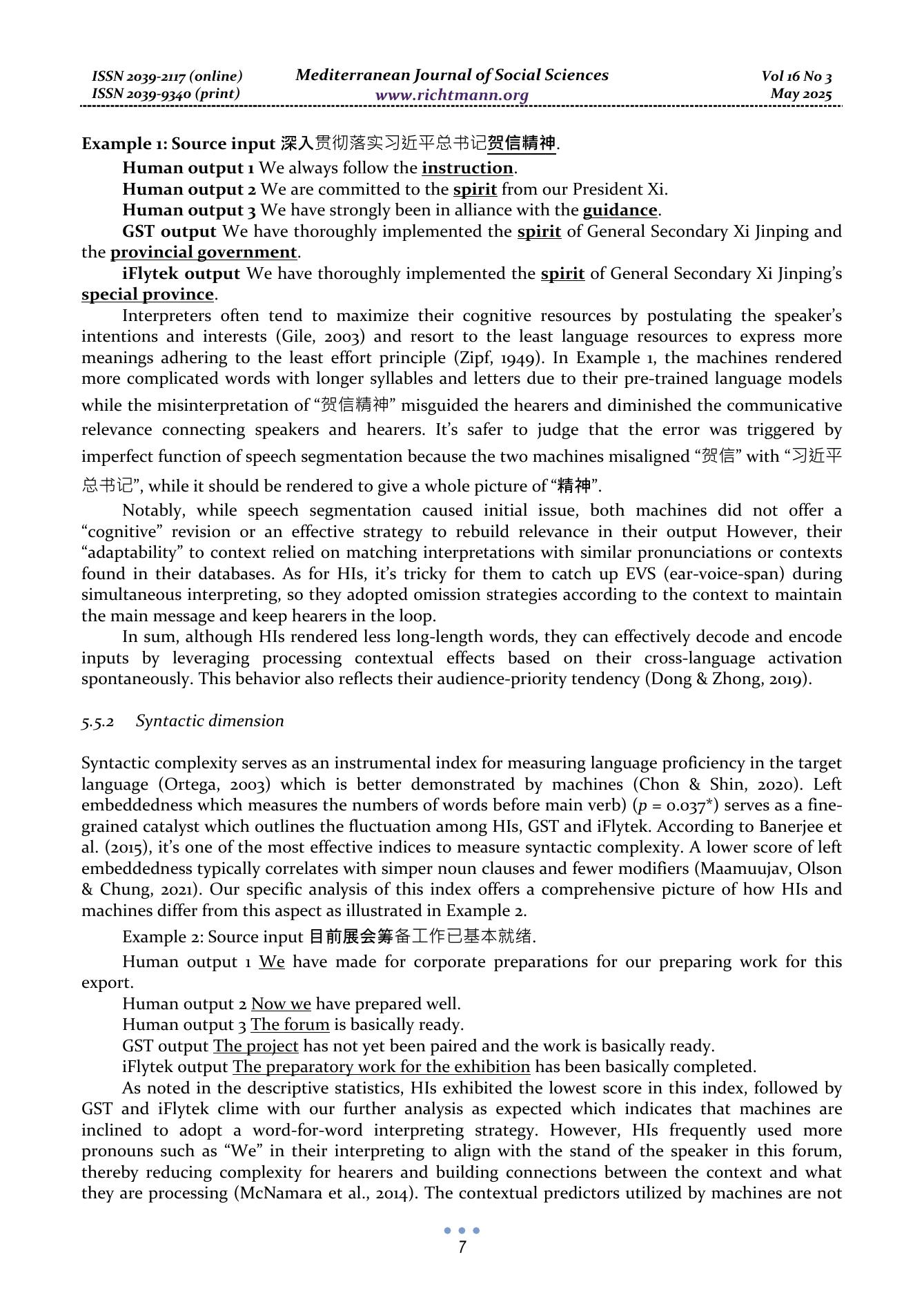 ANOVA results showing significant differences across lexical, syntactic, and textual indices
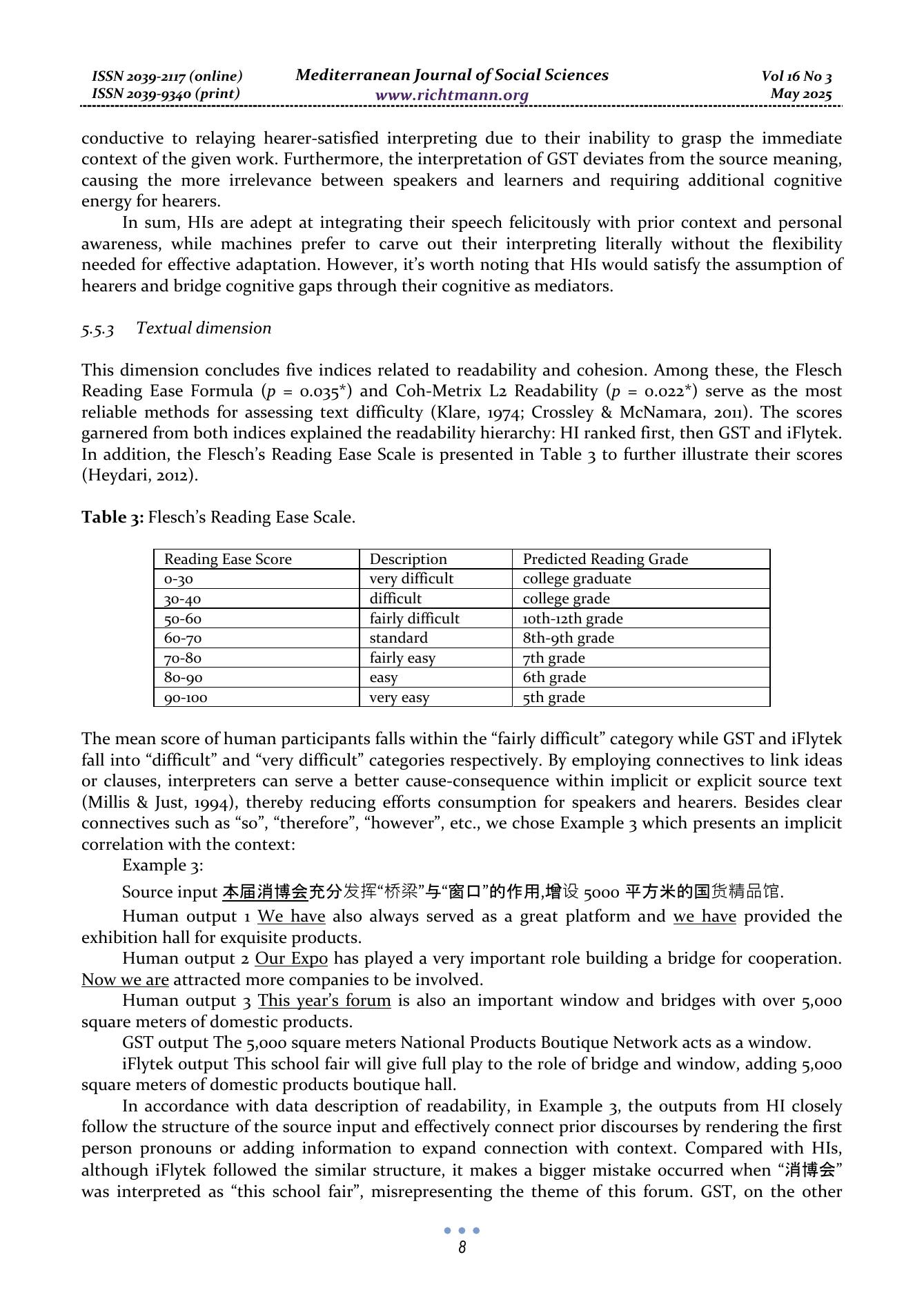 Detailed comparison of human vs. machine performance on context-aware linguistic features
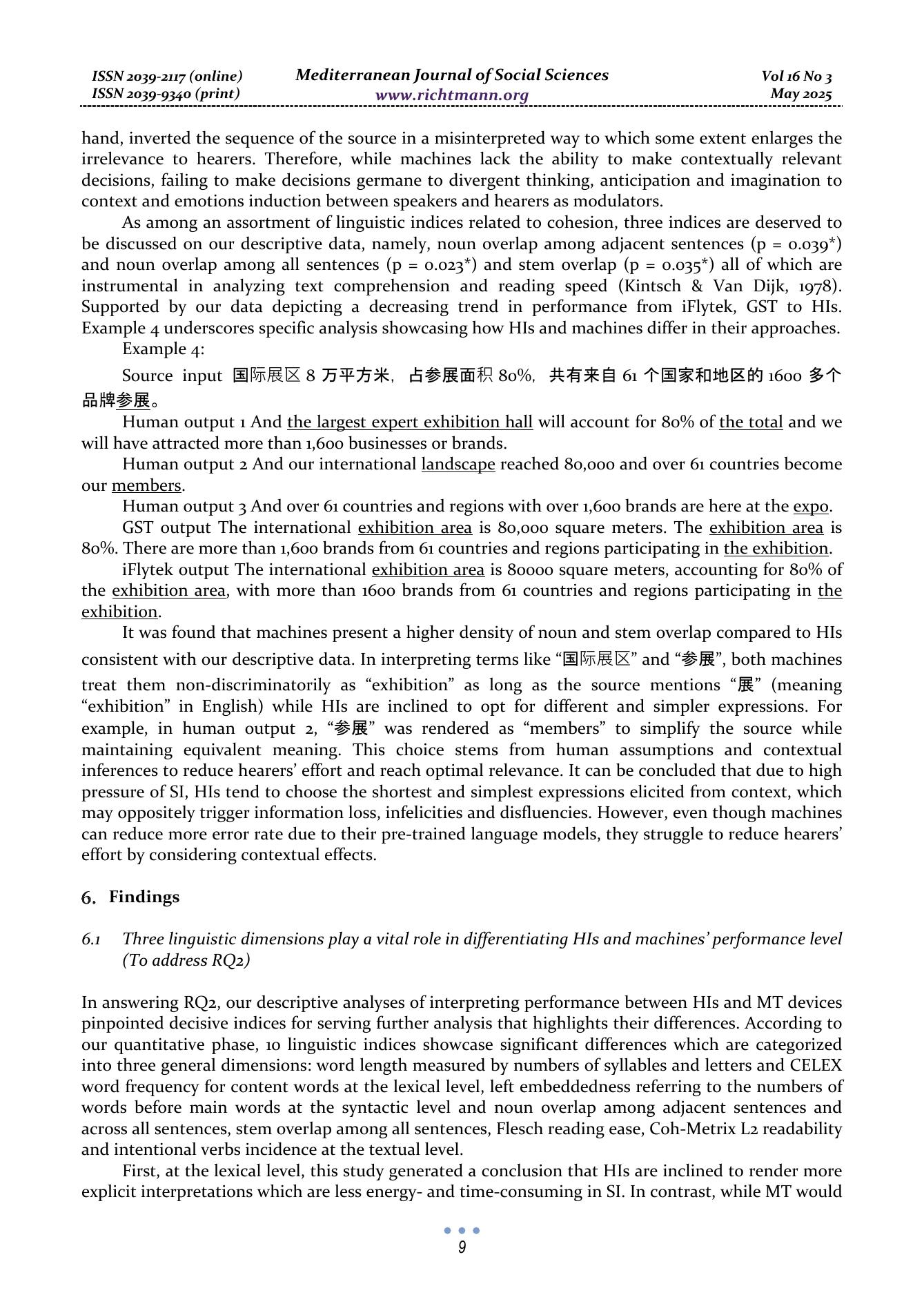 Discussion of findings through the lens of Relevance Theory
Key Findings
| Level | Human Interpreters | Machine Devices |
|---|---|---|
| Lexical | Rich vocabulary, context-appropriate word choice | Limited, often literal translation |
| Syntactic | Flexible sentence restructuring | Rigid, source-language dependent |
| Textual | Maintains coherence & common ground | Lacks cross-sentence context awareness |
Implications
- Greater training needed to enhance human interpreters’ context adaptation skills
- MT systems need improved context-awareness capabilities
- Relevance Theory provides a powerful framework for evaluating interpreting quality
Keywords: Machine interpreting, Comparative study, Relevance theory, Context awareness
Recommended citation: *Tan, L.Y., & Gao, L. (2025). Pointing to context from a relevance theory perspective: A comparative study of human and machine interpreting. Mediterranean Journal of Social Sciences, 16(3), 1.
Download Paper